
Aspire Business Solutions Blog
Aspire Business Solutions has been serving the Oklahoma City area since 2008, providing IT Support such as technical helpdesk support, computer support, and consulting to small and medium-sized businesses.


For over three decades, Microsoft Publisher has served as a trusty helper for quick flyers, party invitations, and office newsletters whenever Microsoft Word proved too stubborn with image positioning.
However, all tech chapters eventually come to a close. Microsoft has officially set an End of Life (EOL) date for Publisher on October 13, 2026.
0 Comments

When a business first starts to gain traction, the initial scaling phase feels exhilarating. Revenue is climbing, you’re adding new clients, and your headcount is expanding. On the surface, everything looks like a massive success, but behind the scenes, a quiet danger begins to brew.
To keep up with rapid growth, various departments might start adopting new software tools on the fly—tools that don’t talk to each other. Before you know it, your business is built on systems that require double data entry, custom spreadsheet workarounds, and fragile third-party automations.

Artificial intelligence systems require massive amounts of information to operate effectively. When employees begin utilizing these tools, the volume of data moving across a network increases rapidly. This surge creates operational challenges, security vulnerabilities, and system inaccuracies if it is not managed correctly from the start.

The biggest time thief in 2026 isn’t a slow computer; it’s a software silo. This happens when your various tools, including your CRM, accounting software, and project management apps, don’t talk to each other. When your apps are siloed in this way, your employees become the human bridges that connect them, and that comes at a cost.

Security is about more than million-dollar firewalls; often, it’s about the small, daily habits that keep small issues from escalating into major problems. Today, the lines between personal and professional lives are blurrier than ever, and a compromised personal device could also mean access to an entire corporate network.

Nothing is quite as annoying (and if it’s severe enough, stressful) as misplacing an important file. Let’s talk about how you can more easily find one that’s disappeared into your digital storage, whether it lives on your network hardware or in a cloud drive, and earn some points in your boss’ eyes while you’re at it.

Forget the sophisticated cyber-attacks you see in the news. Often, the real business killer is much more mundane: that aging server in your storage room. Many business owners assume that if it’s still humming, it’s still working. Unfortunately, hardware doesn’t just retire; it crashes; usually at the worst possible moment. When a primary server fails, it doesn't just take your data with it; it takes away your ability to compete.

Of all the features and capabilities modern workplace software offers, it is very possible that the spreadsheet tool offers the most… with relatively few people realizing what they have access to within it. There are many very smart inclusions that can make life much easier for those who know what they’re doing.
For example, if your data is formatted correctly, it is easy enough to identify which day of the week a given date falls on.

When hackers steal data, they don't just sit on it. Sometimes they delete it, but most of the time, they sell it or use it for illegal activities. A lot of this stolen data ends up on the Dark Web, a hidden part of the Internet where people do shady things. That's why it's so important to keep an eye on the Dark Web to protect your business.

Clutter accumulates everywhere—the household junk drawer, an employee’s car, and yes, even your business’ network. In your business network, this clutter is called “digital cruft” and can lead to some pretty serious problems if you aren’t careful.

It’s easy for employees to reuse passwords just to make things easier for themselves; after all, why use different passwords when you have a dozen accounts to remember passwords for? Unfortunately, this habit will come back to bite you, especially if your business is ever involved in a data breach. These credentials could be put up for sale on the dark web… and that’s just the beginning of your problems.
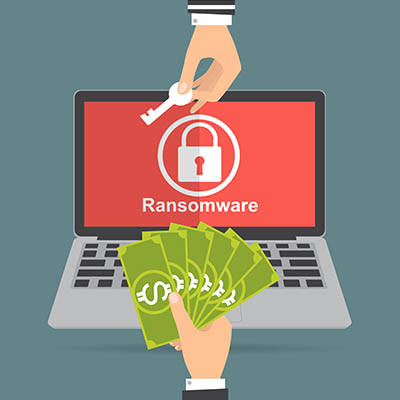
Here’s a challenge; go to any cybersecurity news website and see how far you can go before seeing an article about some new type of ransomware attack. It’s everywhere, and it’s scary, but that doesn’t mean your business has to cower in fear. With the right tools and resources at your disposal, you too can fight back against ransomware. Here’s how you can protect your business from ransomware and the threats it poses.

While data might be the new currency, your own business’ data might be a bit too messy to make full use of. You might be paying to store it and protect it, but you’re not doing as much with your data as you’d like. Here’s how businesses find themselves with these “data graveyards” and why it essentially functions like a debt rather than an asset.

Data loss is looming on the horizon, not just for you, but for all unprepared businesses. Are you confident in your ability to recover from a potential data loss incident? Like any IT challenge and risk, it helps to know what you’re up against, so today, we’re covering three of the most common data loss scenarios so you can be prepared for them well in advance.

For small and medium-sized businesses, a data backup plan might seem difficult or even impossible to implement without the right in-house IT expertise. That’s no excuse to neglect data backup, though. Today, we want to share the 3-2-1 backup rule, which is an ideal standard to aim for.
When your business’ data is so crucial to your successful operations, there are certain precautions that you simply need to take for the sake of your business’ longevity. One such precaution: data backup.
Your data is the gas that powers your business’ engine, whether you’re referring to project files and intellectual property or financial info and customer records. As such, imagine what it would mean if your business ran out of gas… or, more accurately, it was siphoned out.
Small businesses today generate a lot of data. From customer details and sales records to inventory tracking and employee schedules, you need to be able to structure this data so that you can use it effectively. Keeping that data organized and accessible is important, but managing it effectively can often be a hassle. This is where smart database management comes in. When done right, it helps businesses run smoother and often save money.
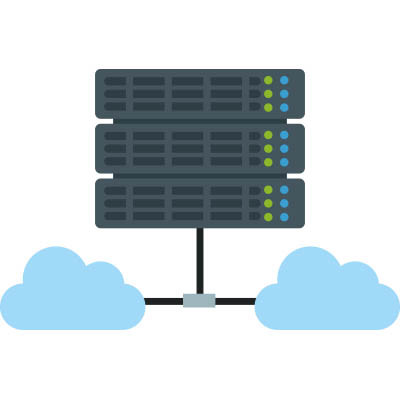
Data storage can be difficult for SMBs to manage, but the cloud can make it significantly easier (and cheaper). There are real, tangible benefits of using the cloud for your data storage needs. Today, we’ll look at three major reasons why your organization should have cloud storage on its list of tech infrastructure priorities in the coming months.

It should come as no surprise that cybersecurity is a big challenge for businesses and individuals alike. The problem: life pretty much revolves around being online these days, so there’s no avoiding it. Therefore, it’s your responsibility to ensure that any data you collect from your customers, employees, and other key stakeholders in your business is well-protected, otherwise you will face severe consequences.

Every business’ worst nightmare is a data loss incident, and if you’re caught unawares, such an incident can set you back financially and operationally for months. Today, we want to cover some of the common data your business collects that you absolutely need to have backed up. If you don’t, you could become subject to serious fines due to regulations and other industry-specific mandates.
Mobile? Grab this Article